



How infrastructure secondaries can be additive to an investor‘s portfolio




2025 marked a record year for the infrastructure secondaries market, with deal volumes reaching approximately
Since 2016, infrastructure assets under management have expanded at a compound annual growth rate of approximately 17%, surpassing most other major private capital asset classes. This sustained growth has been driven by megatrends, including decarbonization, digitization, urbanization, sustainability, and demographic trends, cementing infrastructure as a core allocation within institutional portfolios.
Looking ahead, the outlook for infrastructure secondaries is increasingly compelling. The sheer scale of primary private infrastructure fundraising over the past decade, combined with the growing maturity of these funds and the continued expansion of the infrastructure manager universe, is set to translate into a steadily rising volume of secondary opportunities in the near to medium term. This dynamic has been further reinforced by the heightened need for both LPs and GPs to generate liquidity following several years of subdued M&A activity.
LPs turn to the secondary market for a wide range of reasons. These include the need to raise liquidity at the portfolio level, including, at times, distressed or “fire-sale” transactions, as well as portfolio rebalancing driven by the denominator effect, over-exposure to specific managers or strategies, or broader shifts in investment strategy. Against this backdrop, infrastructure secondaries remain one of the fastest-growing, and still relatively undercapitalized, segments of the global secondaries market. As per PJT, the infrastructure secondaries market has grown from c. $11 billion to c. $25 billion over the last two years. Going forward, the market is expected to reach c. $45 billion by the end of the decade. 1
Infrastructure funds AuM (USDbn)1
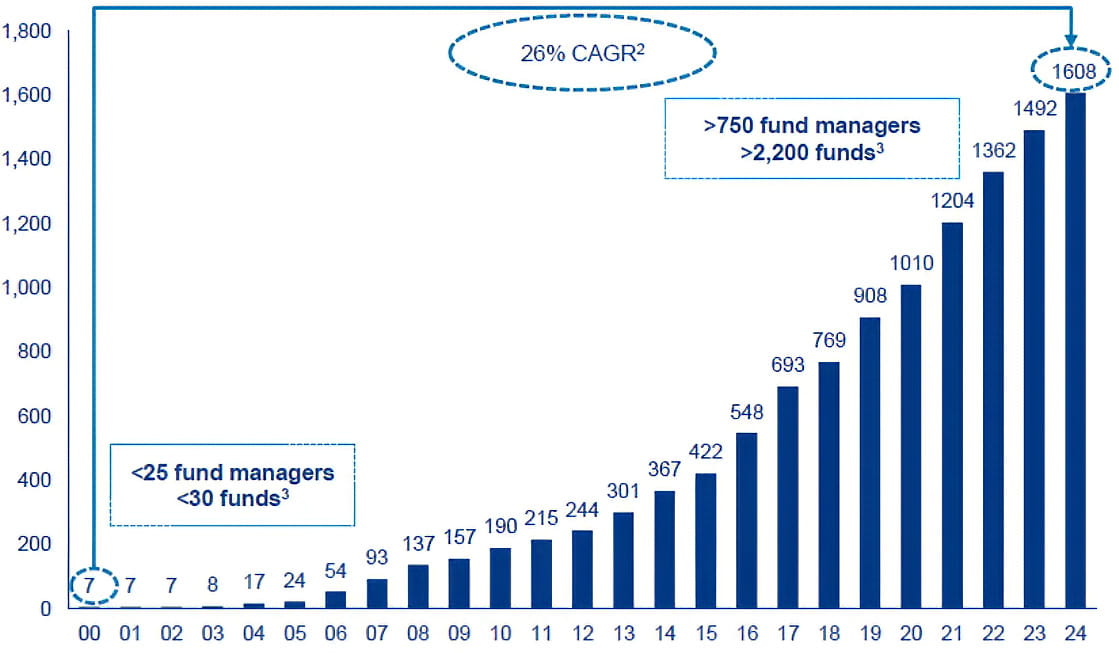
1As of September 2024. 2Compound annual growth rate, i.e. the annualized average rate of growth. 3All active unlisted infrastructure funds excluding de-listed and mutual funds; including infrastructure funds investing in debt-like instruments. Last available data as of June 2025. Source: Allianz Global Investors, based on Preqin data accessed in June 2025.
Infrastructure Secondaries
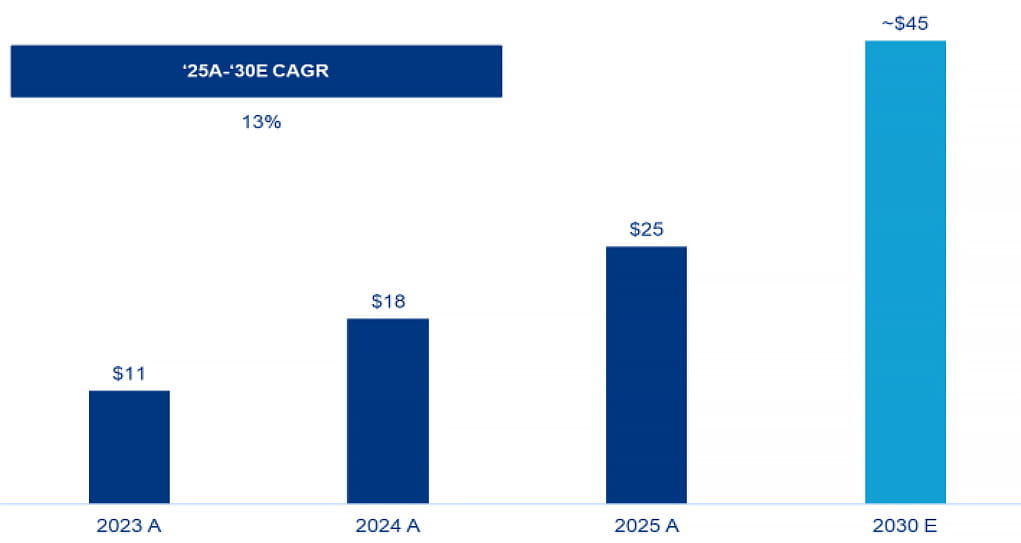
Source: PJT Partners, FY2025 Secondary Market Insight (January 2026); PJT PCS Market Intelligence, responses to the FY 2025 PJT Park Hill Secondaries Market Survey. (1) Historical volume estimates based on previous PJT PCS Market Insight reports.
We believe that infrastructure secondaries offer a compelling investment proposition, combining the defensive and cash-generative characteristics of the infrastructure asset class with the distinctive advantages of the secondary transaction dynamic.
Firstly, secondary transactions typically provide exposure to more mature funds that are already well advanced in their value-creation or harvesting phase. At this stage of the lifecycle, assets are often inherently less risky (for example, projects that were previously in development may now be fully constructed and operational), resulting in a more de-risked investment profile.
Secondly, secondary investments can meaningfully mitigate the J-curve commonly associated with primary commitments. By acquiring interests in seasoned portfolios that a general partner has already held for several years, investors gain exposure to assets with shorter remaining hold periods and, consequently, more visible exit timelines. In infrastructure specifically, these assets are also more likely to be cash-yielding from day one, enhancing early cash flow and return predictability for secondary buyers.
Thirdly, secondaries provide a rare opportunity to access high-quality assets that are not otherwise available for sale. Through secondary transactions, investors can gain exposure to infrastructure assets that GPs have accumulated over many years and are not actively looking to divest. This feature is particularly attractive in private infrastructure, where certain sub-segments may be characterized by a limited number of highly attractive assets benefiting from strong competitive advantages.
Taken together, these characteristics underscore the role of infrastructure secondaries as a valuable complement within institutional portfolios. As investors increasingly seek portfolio visibility, earlier cash flows, and access to high-quality assets, infrastructure secondaries are well positioned to represent a growing share of private market allocations in the years ahead.
1 Preqin, PJT Partners – FY2025 Secondary Market Insight (January 2026)